Lab note
Iron Filter for Well Water: Match the Treatment to Your Iron Level
The right iron filter depends on two things from your lab report: how much iron (and manganese) is in the water, and what form it’s in. Penn State Extension generally recommends a water softener only when dissolved iron is below 5 mg/L (and pH and hardness fit), a manganese greensand oxidizing filter when combined iron and manganese is 3 to 10 mg/L, and “oxidation followed by filtration” above 10 mg/L of combined iron and manganese. Minnesota’s health department gives somewhat higher limits for filters, counting iron alone. The common reference point is 0.3 mg/L: above it, Minnesota says iron is “usually considered objectionable.”
Why there’s iron in your well water
Minnesota’s health department explains that “water seeps through iron-bearing soil and rock,” dissolving iron, and that “In some cases, iron can also result from corrosion of iron or steel well casing or water pipes.” Penn State adds that iron and manganese are “more common in deeper wells where the water has been in contact with rock for a longer time,” and that the two “often occur together.” A Penn State survey found “excessive iron concentrations in 17% of the private water supplies sampled” in Pennsylvania.
Signs: stains, taste and color
EPA’s secondary standards table lists what each metal does:
| Metal | EPA secondary standard | What you notice (EPA) |
|---|---|---|
| Iron | 0.3 mg/L | “rusty color; sediment; metallic taste; reddish or orange staining” |
| Manganese | 0.05 mg/L | “black to brown color; black staining; bitter metallic taste” |
Minnesota’s health department adds that iron can “Turn potatoes black” and clog “wells, pumps, sprinklers, dishwashers, and other devices over time.”
The form of iron changes the treatment. Minnesota describes three:
- Ferrous (“clear-water”) iron: “Water comes out of the faucet clear, but turns red or brown after standing.”
- Ferric (“red-water”) iron: “Water is red or yellow when it first comes out of the faucet.”
- Organic iron: “usually yellow or brown, but may be colorless,” more likely in very shallow wells or wells affected by surface water.
Iron bacteria are a separate problem, with “Sticky rusty, yellow, brown, or grey slime.” Minnesota says iron bacteria “are not known to cause disease,” but “can create conditions where other disease-causing organisms may grow,” and advises: “To be safe, test the water for nitrate and coliform bacteria.” Treating them is work for “a licensed well contractor or water treatment professional.”
Iron levels and what they mean
For iron, EPA’s 0.3 mg/L is a non-mandatory secondary standard, and Vermont’s health department says: “No health risk, but you may choose to treat above 0.30 mg/L to improve taste and appearance of water.”
Manganese also has health-based levels:
| Source | Manganese level |
|---|---|
| U.S. EPA (cited by Penn State) | “a Health Advisory for manganese of 0.3 mg/L” |
| Vermont Dept. of Health | treatment recommended above “0.300 mg/L” |
| Minnesota Dept. of Health | harmful “For babies under one year old” above 100 µg/L; “For everyone else” above 300 µg/L |
If your well may have manganese, test through a state-certified lab and ask your state or local health department what your result means.
Two sources give treatment ranges by level. They don’t fully agree, and they don’t measure the same thing: Penn State’s filter ranges are for combined iron and manganese, Minnesota’s are for iron.
| Treatment | Penn State Extension (Pennsylvania) | Minnesota Dept. of Health |
|---|---|---|
| Water softener | dissolved iron “less than 5 mg/L,” pH “greater than 6.7,” hardness 3–20 gpg | clear-water iron: “2 to 5 mg/L is a more common limit” (some makers report up to 10) |
| Polyphosphate (hides iron, doesn’t remove it) | dissolved iron “less than 2 mg/L”; “it will still give the water a metallic taste” | — |
| Catalytic carbon | dissolved iron below 1.0 mg/L; “requires a minimum of 4.0 mg/L of dissolved oxygen” | — |
| Manganese greensand filter | combined iron and manganese “3 to 10 mg/L” | iron “up to 10 to 15 mg/L” |
| Birm filter | pH at least 6.8 for iron, 7.5 for manganese; needs dissolved oxygen | — |
| Oxidation + filtration (Penn State: chemical oxidant; Minnesota: aeration or chemical oxidation) | combined iron and manganese above 10 mg/L | iron “more than 10 mg/L” |
Treatment options by iron level
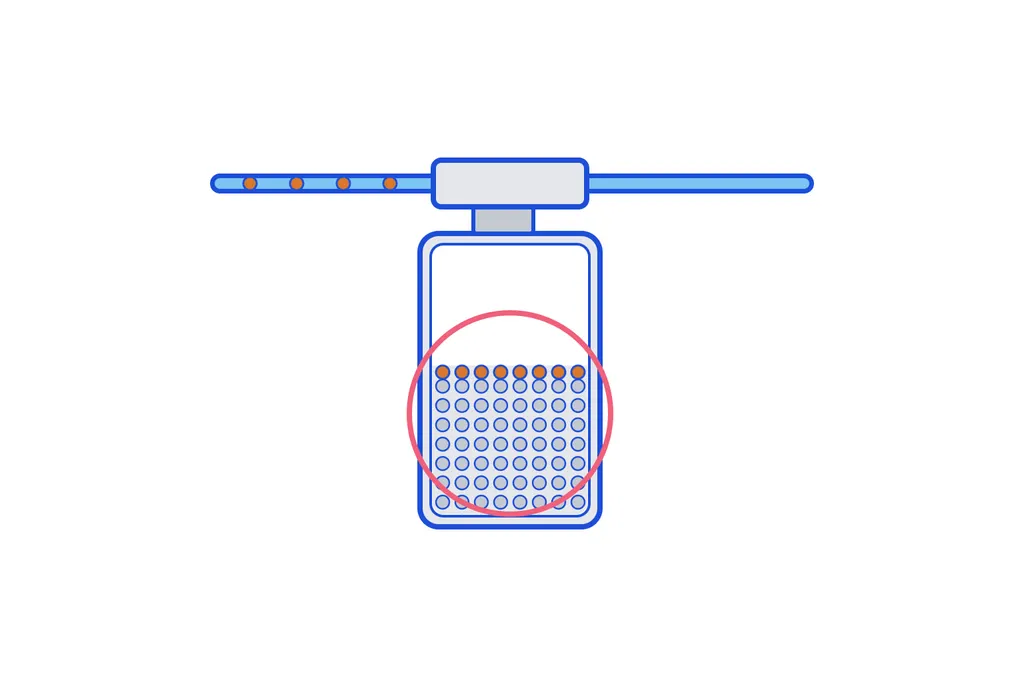
Water softener. It exchanges dissolved iron for sodium, like hardness. Penn State: “Oxidized forms of iron and manganese will foul the softener resin,” so water must not meet air or chlorine before the softener. Minnesota warns that a softener is less effective with “low water hardness and high iron” or with air contact, such as an air-charged “galvanized pressure tank.”
Oxidizing filters (greensand, Birm). They “both oxidize and filter iron and manganese in one unit,” per Penn State, and handle both dissolved and oxidized iron. Greensand needs “frequent regeneration with a potassium permanganate solution,” which “is toxic and must be handled and stored carefully.” Birm needs no regeneration but depends on oxygen and pH in the raw water.
Oxidation followed by filtration. A small chemical feed pump adds an oxidant (Penn State: chlorine is the most common) ahead of a mixing tank and a filter that backwashes. Minnesota cautions that with chemical oxidation “proper dosing can be difficult and carries health risks if improperly dosed.” This is a job for a water treatment professional.
Aeration. No added chemicals and low upkeep, but Penn State says “the initial purchase costs are often higher,” a filter still has to catch the iron, and the water “should also be disinfected.”
Organic iron and tannins. Minnesota says they “can slow or prevent iron oxidation,” so softeners, aeration and iron filters “may not work well.”
What it costs:
| Source | What the figure covers | Cost |
|---|---|---|
| HomeGuide (Apr 2026) | Iron/manganese removal system, unit | $500–$2,500 |
| HomeGuide (Apr 2026) | Same, “fully installed” | $1,000–$3,500 |
| Penn State Extension (Jul 2026) | “Most larger, whole-house point-of-entry (POE) filters,” including oxidizing filters; installation not specified | $500–$1,500 |
A filter that backwashes needs a drain, and a chemical feed pump needs power. Have a licensed plumber install it, and ask whether your town requires a permit.
Can a water softener remove iron?
Sometimes. Penn State says conventional softeners “are sometimes effective for removing iron and small amounts of manganese,” under the pH, hardness and iron limits in the table above. Minnesota says softeners are “the more common method” for clear-water iron. For red-water iron, it says softeners “can remove small amounts of iron, but the iron will quickly plug the system.” Its softening FAQ adds: “Sometimes it may be necessary to filter the water before it gets to your softener to prevent fouling.”
HomeGuide’s cost guide uses a lower cut-off: above “1 to 2 ppm of iron,” it says to install a dedicated iron filter before the softener. With three different numbers in circulation, ask the softener maker to size the unit for your actual lab results. Our Water Check tool doesn’t add an iron allowance to softener size, because the sources we found disagree on how much extra capacity iron needs; see what size water softener do I need.
Testing and retesting
“Yellow or red colored water is often a good indication that iron is present,” says Minnesota’s health department, “However, a laboratory can tell you the exact amount of iron.” It suggests also testing “for hardness, pH, alkalinity, and iron bacteria.” Penn State says to note the form too: water that comes out clear and then forms particles has dissolved iron.
| Test | Penn State AASL, Pennsylvania (checked Nov 1, 2026) | Wisconsin State Lab of Hygiene (eff. July 1, 2026) |
|---|---|---|
| Iron | $15 | $38 |
| Manganese | $15 | $38 |
| Hardness | $20 | $46 |
| Iron bacteria | — | $72 |
| Package | $85 “Aesthetics / Corrosivity” (incl. hardness, alkalinity, iron, manganese, pH) | $97 metals screen |
More on well water testing cost. Vermont’s health department: “If you install a treatment system, it is important to test your water again.” Rotten-egg smell too? See sulfur smell in well water; for a multi-stage setup, whole house water filter for well water.
This site doesn’t give medical advice. For health questions about your water, ask your state or local health department.
Tool
Have a hardness number or a well test? Water Check turns it into what to install, the size and a price range.
Open Water CheckAn AI tool drew the illustrations on this page as simple diagrams. They are not photographs of real homes, water systems, products or people.
Sources
- Penn State Extension — Iron and Manganese in Private Water Systems (updated May 29, 2025)
- Penn State Extension — Tips for Buying Water Treatment Equipment (updated July 1, 2026)
- Minnesota Department of Health — Iron in Well Water (last updated Aug 1, 2025)
- Minnesota Department of Health — Iron Bacteria in Well Water (last updated Jan 7, 2026)
- Minnesota Department of Health — Home Water Softening FAQ (last updated Oct 3, 2022)
- Minnesota Department of Health — Well Testing, Results, and Options (last updated Oct 19, 2026)
- Vermont Department of Health — Residential Drinking Water Testing, contaminant table (last updated Oct 30, 2026)
- U.S. EPA — Secondary Drinking Water Standards: Guidance for Nuisance Chemicals (last updated May 26, 2026)
- HomeGuide — How Much Does a Well Water Filtration System Cost? (Apr 24, 2026)
- Penn State Agricultural Analytical Services Lab — Drinking Water Testing, service fees (checked Nov 1, 2026)
- Wisconsin State Laboratory of Hygiene — Public Environmental and Water Testing Prices (effective July 1, 2026)
Updated 2026-11-01